

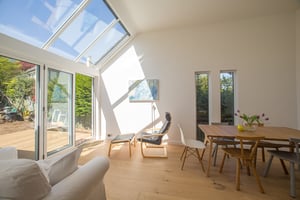
Raising ceiling height is one of the most transformative interventions available in residential architecture. Beyond the obvious spatial benefits, increased ceiling height improves daylight penetration, ventilation, proportions, and long-term adaptability. However, in UK housing stock, much of which is constrained by historic construction methods, planning policy, and structural limitations, raising ceiling height requires careful feasibility analysis and a considered design approach.
As architects, we are often asked whether ceiling height can be increased and, if so, which route offers the best balance of design quality, cost, planning risk, and construction complexity. This article outlines the realistic methods available in the UK context and explains how we typically evaluate them at feasibility stage.
Contents
Understanding ceiling height in the UK
There is no single “legal minimum” ceiling height that applies universally across all existing UK homes. Instead, acceptability is determined by a combination of planning policy, Building Regulations, and practical standards of comfort.
In new residential developments, where adopted by the local authority, the Nationally Described Space Standard sets a minimum finished ceiling height of 2.3m for at least 75% of the Gross Internal Area. While this standard does not automatically apply to existing dwellings, it provides a useful benchmark for spatial quality.
In refurbishments and conversions, particularly loft conversions, ceiling height is typically assessed in relation to:
- stair geometry and headroom
- fire safety strategy
- usability of habitable rooms
- overall spatial proportions rather than a fixed numeric minimum
As designers, we consider ceiling height as part of a wider spatial system rather than an isolated dimension.
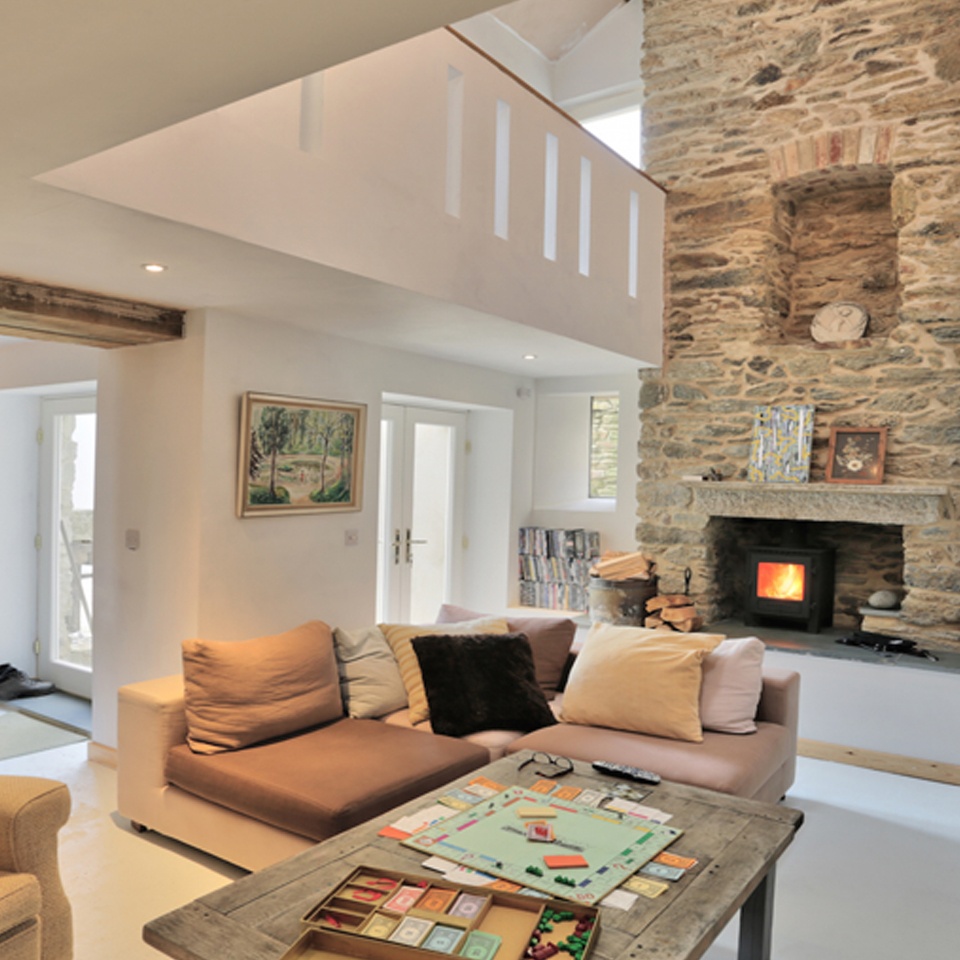
Feasibility of raising ceiling heights
Before any design work begins, we focus on feasibility. This stage is about understanding what can be done, what should be done, and what represents best value for the property.
Rather than jumping straight to solutions, we start by asking a small number of fundamental questions.
What type of building is it?
The age and construction of your home strongly influence what is achievable.
Older properties, such as Victorian or Edwardian houses, often have generous original proportions and traditional construction methods that allow more flexibility.
Newer homes, particularly those built from the mid-20th century onwards, may have tighter floor-to-ceiling heights and engineered roof structures that place greater limits on change.
Understanding how the building was originally built helps us identify both opportunities and constraints early on.
How is the ceiling structure arranged?
Ceiling height is directly tied to structure.
We look at:
- how floors and ceilings are supported
- whether walls are load-bearing
- the type of roof construction above
- where structural elements can be adjusted or rationalised
This allows us to determine whether height can be gained through relatively simple interventions, or whether more substantial structural work would be required.
What is above and below the space?
What sits above or below a room is often as important as the room itself.
For example:
- a top-floor room beneath a pitched roof may be suitable for vaulting
- a ground-floor room above a basement may allow for floor lowering
- rooms with occupied spaces above typically offer fewer options
This context helps us focus on solutions that are realistic rather than theoretical.
Are there planning or heritage constraints when raising ceiling heights?
Local planning policies can significantly influence what is possible.
You assess whether the property is:
- within a conservation area
- listed or locally designated
- subject to Article 4 Directions or neighbourhood policies
Even when work is internal, these designations can affect roof alterations, window proportions, and overall strategy. Where appropriate, we advise on early discussions with the local authority to reduce risk.
How do services affect the ceiling?
Ceilings often conceal more than people expect.
Lighting, ventilation, plumbing, and insulation all occupy space. Raising a ceiling may require these elements to be re-designed rather than simply relocated. We review how services currently run and whether they can be integrated more efficiently as part of the redesign.
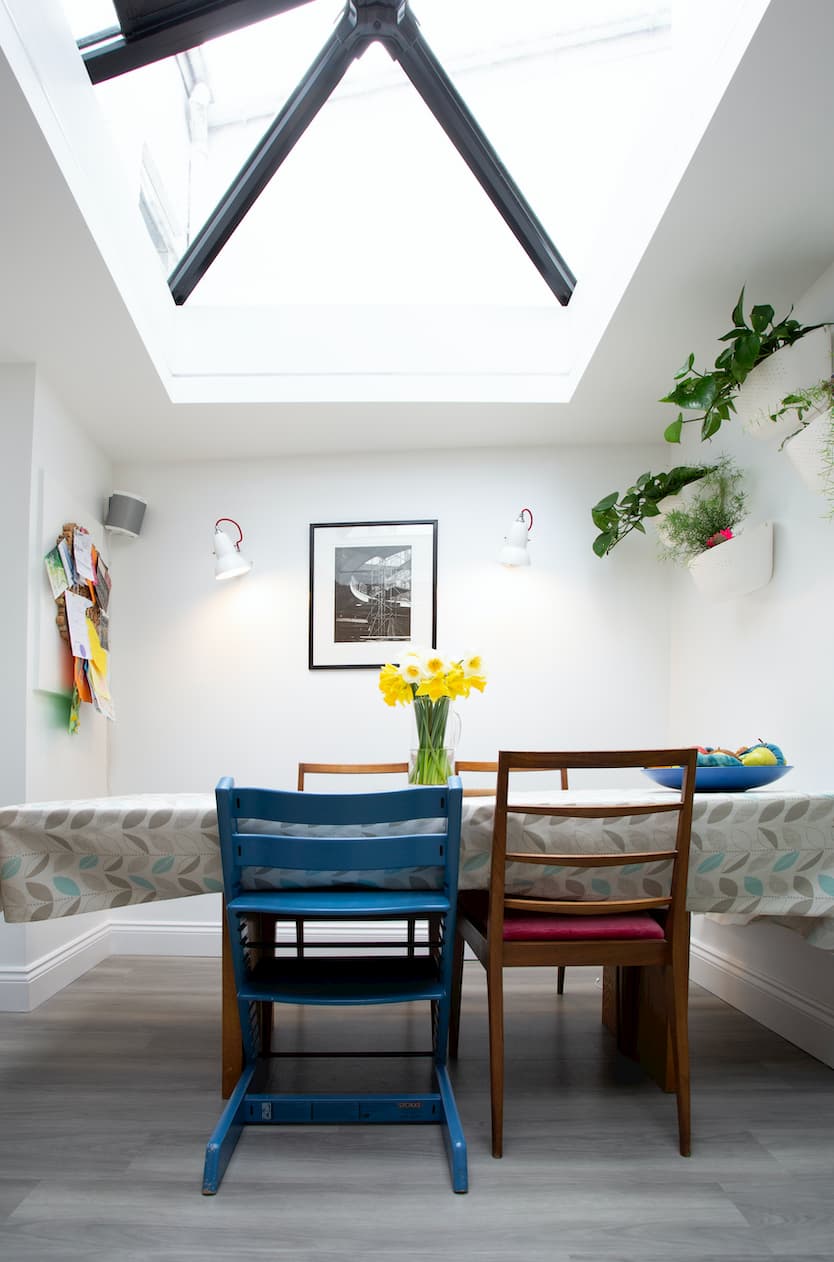
How ceiling height can be increased through design
1. Removal of dropped or suspended ceilings
In many homes, particularly those altered in the late 20th century, ceilings have been lowered to accommodate services or lighting.
From an architectural standpoint, this is often the most efficient intervention:
- Minimal structural work
- Immediate spatial improvement
- Low planning risk
However, removal frequently requires redesign of lighting layouts, insulation upgrades, and careful integration of services to maintain visual clarity.
This approach is typically our first recommendation where feasible.
2. Reconfiguring floor and ceiling structures
Where modest gains are required, it may be possible to adjust the structural depth between floors by introducing steel beams or engineered timber systems.
This is most effective where:
- broader reconfiguration is already planned
- open-plan layouts justify structural rationalisation
- the client seeks incremental height improvement rather than dramatic volume
This method demands close coordination between architect, structural engineer, and Building Control, particularly around acoustic separation and fire performance between storeys.
3. Vaulted and cathedral ceilings
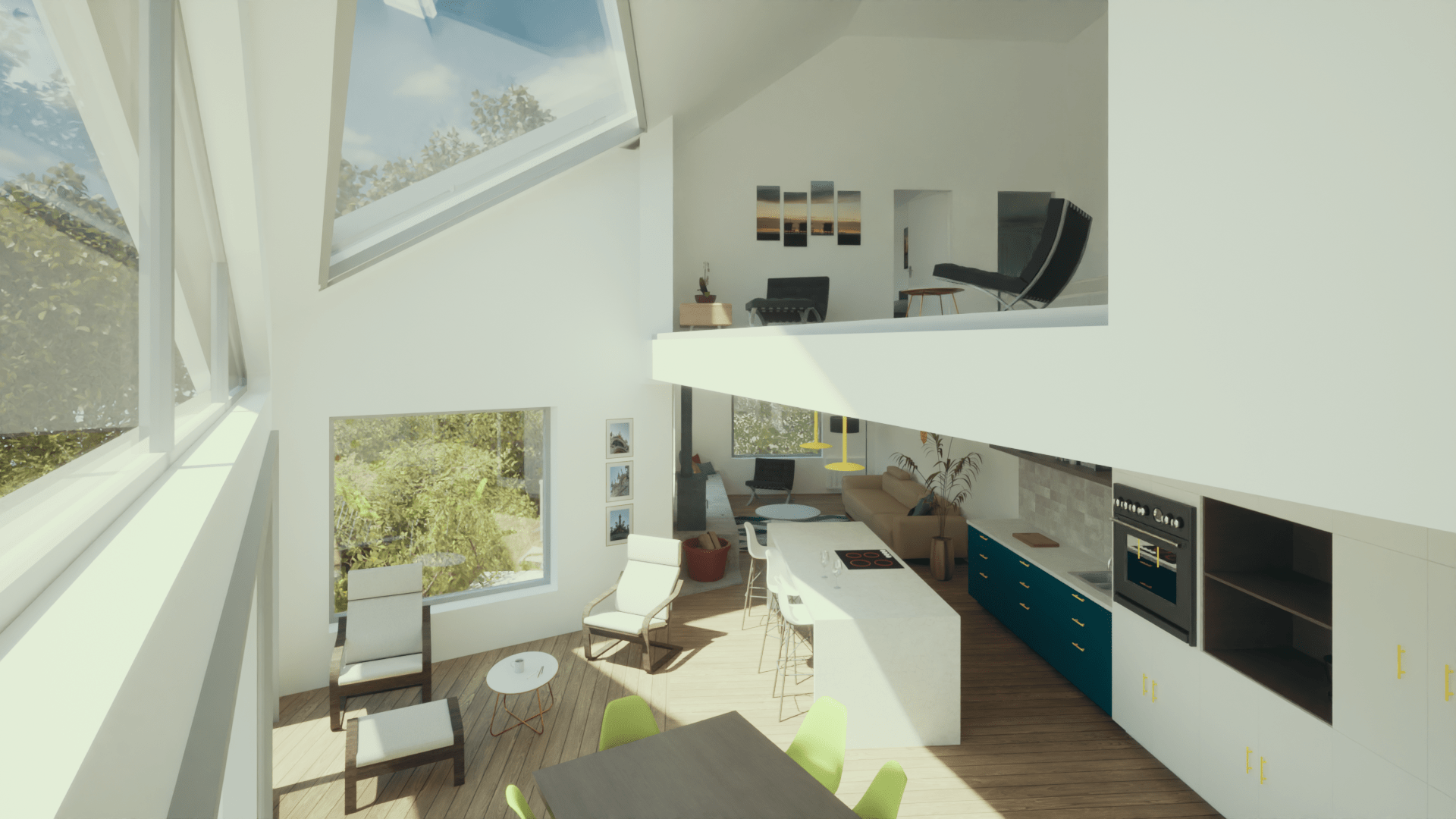
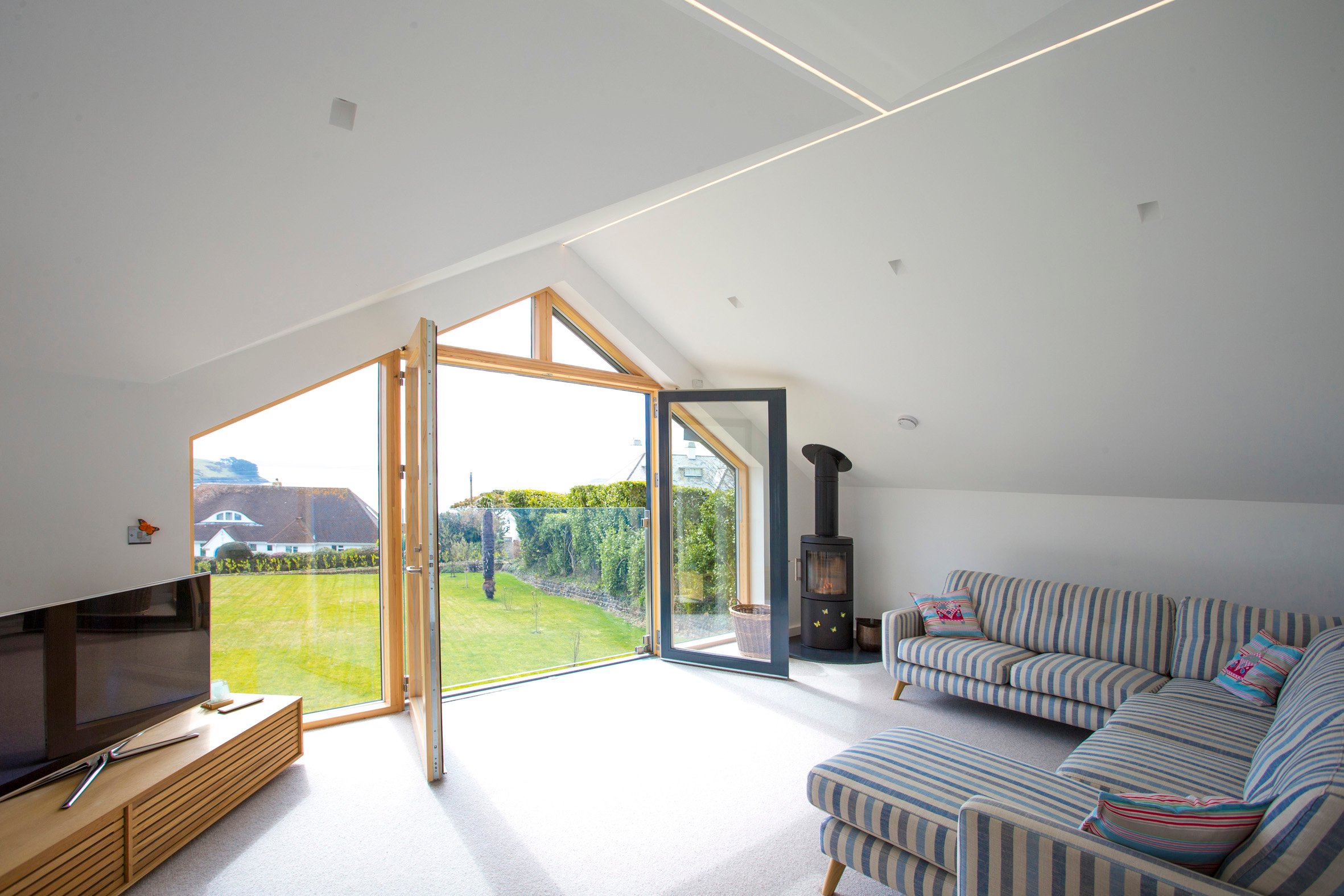
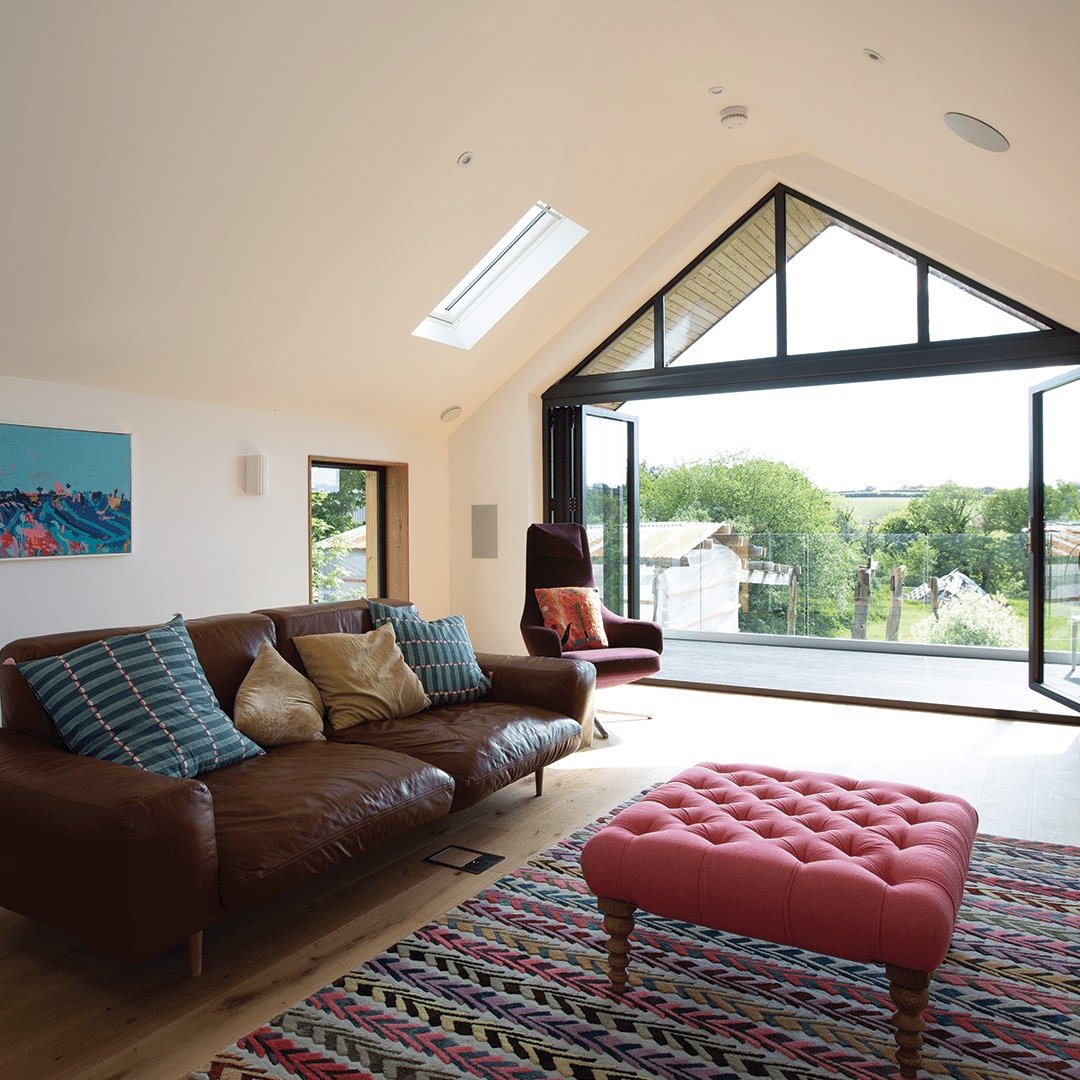
Vaulting a ceiling into the roof structure is a common architectural response for top-floor spaces and can dramatically improve spatial quality without increasing the building’s external height.
Architecturally, this approach requires:
- careful insulation and condensation strategy
- considered daylight design (often via rooflights)
- acoustic treatment where required
- a clear fire strategy if the space forms part of a loft conversion
Vaulted ceilings can fundamentally alter how a space is perceived, even where usable floor area remains unchanged.
4. Lowering floor levels
Lowering floors, most commonly in basements or ground-floor spaces, is structurally complex but sometimes the only viable route where roof alteration is constrained.
From a design and risk perspective, this is a significant intervention involving:
- underpinning or structural reinforcement
- drainage and waterproofing design
- party wall considerations in terraced and semi-detached houses
- high construction disruption
We typically recommend this approach only where it unlocks high-value or long-term functional space.
5. Raising or altering the roof
Altering roof height or form is the most impactful, and most regulated, method of increasing ceiling height.
Architecturally, this can include:
- rebuilding the roof structure
- introducing mansard or raised ridge forms
- full roof replacement as part of major refurbishment
Such interventions almost always require planning permission and careful contextual justification, particularly in sensitive urban or historic settings. Neighbour relationships, visual impact, and policy compliance are central to success.
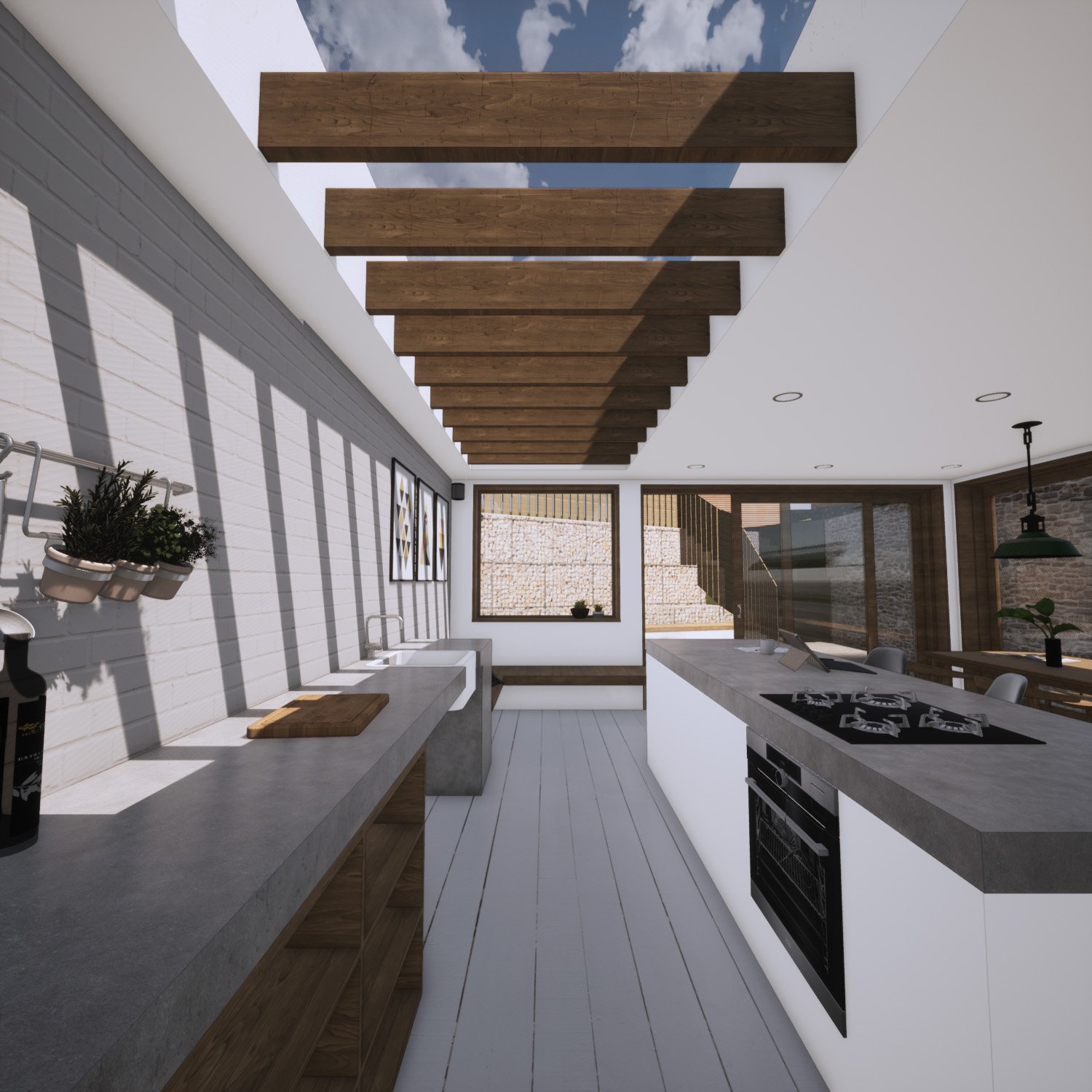
Planning permission and building regulations
Increasing ceiling height is not just a design decision, it is a regulated change that must meet national Building Regulations and, in some cases, requires planning permission. Understanding this early helps avoid delays, redesigns, and unexpected costs later in the process.
Structural safety
Raising a ceiling often involves altering joists, beams, or roof structure. We assess load paths and specify structural solutions to ensure the building remains stable and compliant.
Fire safety and escape routes
Changes to ceiling height can affect fire compartmentation, escape routes, and detection systems. We review layouts carefully to ensure the altered space meets current fire safety standards.
Thermal performance and insulation
When ceilings are raised, insulation strategies often need to change. We design compliant insulation build-ups to maintain energy efficiency and prevent heat loss.
Ventilation and overheating risk
Higher ceilings can improve airflow, but they can also increase the risk of overheating if not designed correctly. We consider natural ventilation, rooflights, and compliance with modern overheating guidance.
Building Regulations approval is typically handled through Building Control or an Approved Inspector, and we coordinate this process on your behalf as part of the design.
Planning considerations and approval
Increasing ceiling height can, in some cases, require planning permission. Whether consent is needed depends on how the proposed works affect the external appearance of the property and its wider setting. Early planning advice is essential to understand risk, feasibility, and the most appropriate design strategy.
What influences the need for planning permission
Several factors typically determine whether planning consent is required and how complex the process may be.
Impact on roof height and massing
Proposals that involve raising the roof, altering its pitch, or increasing the overall volume of the building are more likely to require planning permission.
Pros
- Allows for meaningful increases in ceiling height
- Can unlock improved proportions, daylight, and spatial quality
- Offers greater design flexibility compared to internal-only changes
- Can add long-term value when well integrated
Cons
- Planning permission is usually required
- Higher risk of objections or design constraints
- Increased design and construction costs
- Longer approval timeframes
Changes to external appearance
Even where overall height remains similar, changes such as new rooflights, dormers, or altered roof forms may trigger planning requirements.
Pros
- Opportunities to improve daylight and ventilation
- External changes can enhance architectural character when well designed
- Often easier to justify than full roof height increases
- Can be coordinated with energy or roof upgrades
Cons
- Visual impact may be scrutinised by planners
- Design may be restricted by local planning policy
- Additional drawings and visualisations may be required
- Risk of revisions to address visual or contextual concerns
Conservation areas and listed buildings
Properties in conservation areas or those that are listed are subject to stricter planning controls, even for relatively modest changes.
Pros
- Sensitive design can enhance heritage value
- Well-considered proposals are often viewed favourably
- Planning-led design can result in higher-quality outcomes
- Long-term protection of architectural character
Cons
- Additional approvals such as Listed Building Consent may be required
- Longer and more detailed application process
- Limited scope for external alteration
- Increased professional and consultant fees
Local planning policy and context
Local authority policies, street character, and neighbouring properties all influence how proposals are assessed.
Pros
- Context-led design can strengthen planning applications
- Precedent within the area may support proposals
- Early engagement can clarify what is likely to be acceptable
- Reduces risk of unexpected refusals
Cons
- Policies vary significantly between authorities
- Inconsistent decision-making can introduce uncertainty
- Neighbour objections may influence outcomes
- Additional consultation may be required
Cost considerations and value
The cost of increasing ceiling height can vary widely, depending on the approach taken, the existing structure of the building, and the location of the property. There is no single “standard cost”, and early professional advice is key to understanding what represents good value in your specific situation.
What influences the cost
Several factors typically have the greatest impact on overall cost:
The existing structure
Homes with suspended ceilings, redundant voids, or shallow floor-to-ceiling heights often present the most straightforward opportunities. More complex structural alterations, such as raising roofs or reconfiguring joists, will naturally carry higher costs.
Pros
- Suspended ceilings and redundant voids often allow height to be recovered with minimal disruption
- Lower structural intervention typically means lower construction costs
- Works can often be completed without altering the external appearance
- Shorter construction programmes in many cases
Cons
- The amount of recoverable height can be limited
- Existing services (ducts, pipes, electrics) may need relocating
- Older structures may conceal defects uncovered once ceilings are opened
- Results are dependent on what already exists rather than what is ideally desired
The scope of structural work
Recovering previously lost height is generally more cost-effective than creating entirely new volume. Structural interventions that can be integrated within the existing envelope tend to be simpler and less disruptive.
Pros
- Recovering lost height is usually the most cost-effective approach
- Less invasive works reduce risk to the existing building fabric
- Often easier to obtain Building Regulations approval
- Lower likelihood of extended programme overruns
Cons
- Limited design freedom compared to creating new volume
- Ceiling heights achieved may still fall short of “vaulted” or dramatic proportions
- Structural constraints can restrict lighting, rooflight, or service layouts
- Opportunities are dependent on original construction methods
Planning and regulatory complexity
Properties in conservation areas or listed buildings may require additional design work, reports, and approvals, which can affect programme and budget.
Pros
- Well-managed planning applications can improve design quality and long-term value
- Early approvals reduce risk later in the project
- Listed or conservation-led design can enhance architectural character
- Professional oversight ensures full compliance and peace of mind
Cons
- Additional professional fees for reports, drawings, and submissions
- Longer decision timeframes can affect project start dates
- Design options may be restricted by planning policy
- Higher risk of revisions or refusals if not handled carefully
Location and access
Labour costs, site access, and logistics vary by location and can influence build costs, particularly in tighter urban sites or remote areas.
Pros
- Good access can reduce labour time and construction costs
- Urban areas often provide easier access to specialist contractors
- Proximity to suppliers can shorten lead times
- Well-connected sites simplify logistics and sequencing
Cons
- Tight sites may require manual handling, increasing labour costs
- Remote or coastal locations can carry higher delivery and travel costs
- Restricted access can limit construction methods
- Weather exposure in certain locations may extend programme duration
When raising ceiling height may not be advisable
There are circumstances where alternative design approaches offer better outcomes, including:
- Strict heritage constraints
- Disproportionate structural cost
- Limited planning headroom
- Poor value-to-disruption ratio
In these cases, architectural strategies such as improved lighting design, re-proportioned openings, and refined material palettes can still significantly enhance perceived space.
Our thoughts
Raising ceiling height is rarely a standalone technical exercise. It is a design decision that sits at the intersection of structure, planning, environmental performance, and spatial experience.
The most successful projects are those where:
- Feasibility is tested early
- Regulatory requirements are integrated into the design
- Architectural intent leads technical resolution
As architects, our role is not simply to maximise height, but to determine whether increased height meaningfully improves how a home is lived in, and to deliver that improvement in a way that is coherent, compliant, and enduring.