


One of the questions we regularly explore with homeowners in Cornwall is whether it makes more financial sense to demolish and rebuild their existing bungalow or move somewhere new. There is rarely a straightforward answer, particularly when you consider the cost of construction, the value of your existing property plus the additional expenses associated with moving.
The decision is not purely financial either. Your attachment to the location, the potential of your existing plot plus what you want from your future home can all influence the best way forward. Understanding the costs alongside these considerations will help you make a more informed decision.
Contents
Key takeaways
- Rebuilding on your existing plot can deliver a fully bespoke home for less than the open-market cost of an equivalent property, but only when the numbers are mapped carefully against your specific site and specification.
- Moving house can add tens of thousands of pounds beyond the difference between your current home and the property you are buying. Stamp Duty Land Tax, estate agent fees on your sale, legal costs, surveys, removals plus mortgage charges should all be included when comparing the two options.
- A bungalow demolition and rebuild typically takes 18 to 24 months from design to move-in, so carrying costs such as rent and temporary accommodation must be part of your financial model.
- Design control, location attachment, and planning risk are the three non-financial factors most likely to tip the decision one way or the other.
- A conversation with an architect before you commit to either route can prevent a very expensive mistake.
What rebuilding a bungalow actually involves
The word "rebuild" covers a spectrum. At one end sits a deep retrofit: stripping a bungalow back to its structure and starting almost from scratch inside. At the other sits a full knock-down-and-replace, which means demolishing the existing building entirely and constructing a new home on the cleared plot. Most people comparing bungalow rebuild cost vs buying elsewhere mean the latter, and that is the scenario this guide focuses on.
A full bungalow replacement typically moves through four broad stages.
- Feasibility and design. An architect surveys your plot, explores what planning policy allows, and develops a design that makes the most of the site. This stage shapes everything that follows, which is why it deserves unhurried attention.
- Planning permission. A replacement dwelling will require planning permission. The demolition itself may also require planning permission or prior approval depending on the building, its location plus any planning or heritage constraints. In most cases it makes sense to consider the demolition and replacement together as part of the planning strategy. Pre-application advice can also help identify potential constraints before significant design work is undertaken.
- Demolition. The existing structure is cleared. Depending on size, access, and whether asbestos is present, this takes anywhere from a few days to a few weeks.
- Construction. Your new home is built. Depending on the build system chosen, whether traditional masonry, timber frame, or structural insulated panels, this stage runs from nine to fifteen months for a single-storey dwelling.
The whole journey, from first architect meeting to the moment you walk through your new front door, typically spans 18 to 24 months. That timeline has real financial implications that belong in every bungalow rebuild cost comparison.
Good to know
If your bungalow is listed or sits within a conservation area, demolition needs particularly careful consideration. Demolition of a listed building requires Listed Building Consent, while demolition of an unlisted building within a conservation area can also require planning permission. Heritage significance may make complete replacement difficult to justify, so these constraints should be understood before a rebuild is assumed to be viable.
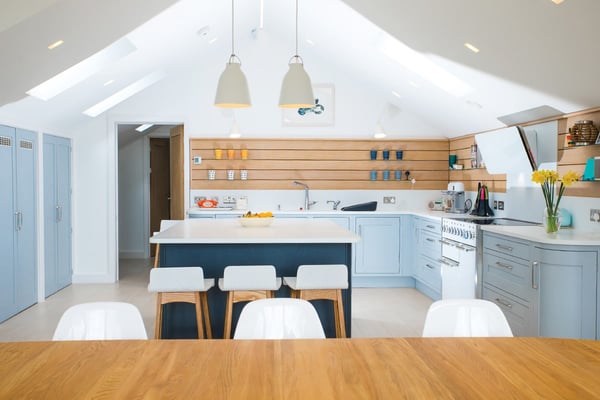
For an example of what can be achieved by replacing an existing bungalow, explore our Seeing Clearly project in St Mawes. Our clients purchased a bungalow in a location they loved but recognised that the existing building did not offer what they wanted from their future home. By starting again with a new design, we were able to create a contemporary family home that made much better use of the site's setting, views plus natural light.
The true cost of rebuilding your bungalow
This is where a lot of rebuild dreams either solidify into a real plan or quietly dissolve. The numbers matter, and they are more nuanced than a single cost-per-square-metre figure suggests. Understanding the true bungalow rebuild cost means accounting for every line item, not just bricks and labour.
Demolition
Before construction can begin, the existing bungalow needs to be demolished safely. The cost will depend on its size, construction, accessibility plus whether asbestos or other hazardous materials are present.
Demolition costs should be established separately from the new construction budget. The works may also include removing existing foundations, managing waste, disconnecting services plus preparing the site for the new building. In some circumstances, parts of the existing foundations or groundworks may be suitable for reuse, although this needs to be assessed carefully by the structural engineer.
Construction costs per square metre
As an early budgeting guide, we would currently allow around £3,000 to £3,500 per square metre for the construction of a new home in Cornwall. Complex ground conditions, difficult access, exposed coastal locations plus higher specifications can increase these figures further.
For example, a 100 m² replacement bungalow could represent approximately £300,000 to £350,000 in construction costs before professional fees, surveys, demolition, external works, temporary accommodation plus contingency are considered.
Single-storey homes can also be relatively expensive to build per square metre. Compared with a two-storey house of the same overall floor area, a bungalow will generally require a larger roof and foundation footprint, which can influence the overall construction cost.
These figures should only be used for initial budgeting. As the design develops, a quantity surveyor or detailed contractor pricing can provide a more accurate understanding of the likely costs based on the proposed specification, design plus individual site conditions.
Professional fees and planning
Professional fees will vary depending on the scale and complexity of the project plus how much support you require throughout design, planning, technical development, procurement plus construction.
Alongside your architectural team, you may need a structural engineer, quantity surveyor, energy assessor, ecologist plus other specialist consultants depending on the site and proposed design. A replacement dwelling will also need to comply with the Building Regulations applicable to new homes, which can influence the specification of insulation, heating, ventilation, drainage plus other technical elements.
There will also be planning application fees, Building Control fees plus other statutory charges to consider.
One particularly important consideration is Community Infrastructure Levy (CIL), which can apply to new dwellings in Cornwall. Depending on the circumstances, existing floorspace may reduce the charge, while eligible self-build projects may qualify for an exemption. However, the correct procedures and timescales must be followed.
Biodiversity Net Gain (BNG) may also need to be considered. Since 6 August 2026, new self-build applications are no longer automatically exempt from BNG. However, developments on sites of 0.2 hectares or less may qualify for an exemption where the relevant conditions are met, including that no onsite priority habitat is negatively affected.
It is worth establishing these costs and requirements early, rather than relying on a single percentage for professional and statutory fees. This will help you understand what is included, what remains uncertain plus where additional expenditure may arise.
Hidden and contingency costs
Site investigation
Depending on the site, you may need investigations covering ground conditions, drainage, contamination or other site specific risks. The scope plus cost varies considerably, particularly where there is historic mining, made ground, challenging geology or limited drainage options. Understanding these requirements early can prevent expensive surprises later.
Asbestos removal
If your bungalow was built or refurbished before 2000, asbestos containing materials may be present within the building fabric. Before demolition or major refurbishment, an appropriate asbestos survey will normally be needed to identify materials that could be disturbed. Removal costs vary significantly depending on what is found plus how it needs to be handled.
Temporary accommodation
If you are demolishing your existing bungalow, you will need somewhere else to live while the replacement is constructed.
For budgeting purposes, it would be sensible to allow for approximately 12 to 18 months of temporary accommodation, although the actual period will depend on when you need to leave your existing home plus the construction programme.
You should also consider removal costs, storage, additional travel expenses plus the possibility of having to extend a rental agreement if construction takes longer than anticipated.
Contingency
Build projects almost always encounter surprises. A contingency of 15 to 20% at the early budgeting stage gives you room for unknowns while the design plus specification are still developing.
There can also be a significant difference in VAT treatment between renovating an existing bungalow and constructing a replacement dwelling.
The construction of a qualifying new home can benefit from zero-rated VAT on eligible construction services and building materials, subject to HMRC's requirements. However, this does not mean the entire project is automatically VAT free. Professional services, including architectural design, surveying plus consultancy services supplied separately, are generally subject to the standard 20% rate.
By comparison, most renovation work to an existing occupied home is subject to 20% VAT, although certain qualifying works may benefit from a reduced rate of 5%.
This difference can have a considerable influence on the overall project budget. It is therefore important to establish the VAT position early, particularly when comparing extensive renovation with demolition and rebuilding.
Online rebuild calculators should be treated with caution when budgeting for a replacement home. Insurance reinstatement costs are calculated for a different purpose from the likely tender cost of designing and constructing your proposed new home. For an early project budget, speak to your design team plus ideally a quantity surveyor who can consider the design, site, access, specification plus local construction market.
The true cost of buying elsewhere
The appeal of buying elsewhere is the apparent simplicity of it. You sell, you buy, you move. But the gap between the headline price of a property and what you actually spend to get there is wider than most people realise. When you are comparing bungalow rebuild cost vs buying elsewhere honestly, the purchase route carries its own layer of costs that rarely feature in the initial excitement.
Stamp duty land tax
In England, Stamp Duty Land Tax on a £400,000 purchase is currently £10,000. On a £600,000 purchase it rises to £20,000, assuming the standard residential rates apply.
If you buy your new home before selling your existing main residence, the higher rates for additional dwellings will usually apply, adding 5 percentage points to the standard residential bands. If the previous main residence is then sold within the qualifying period, you may be able to reclaim the additional amount.
Stamp duty is a significant transaction cost because none of it adds directly to the design, size or quality of your new home.
Agent and legal fees
Selling your bungalow will cost between 1% and 3% in estate agent commission, plus VAT. Add your solicitor's fees on the sale, typically £1,000 to £2,500, and then the same again on the purchase. Survey costs on the property you are buying add another £500 to £1,500 depending on the level of inspection.
Mortgage costs and market premiums
If you are moving to a more expensive property, you may need additional borrowing depending on the equity available from your existing home. Mortgage arrangement fees, broker fees plus any early repayment charges should all be considered when calculating the cost of moving.
It is also worth understanding how your monthly mortgage payments may change, particularly if you need to borrow more or move onto a different interest rate.
In desirable areas of Cornwall, finding an existing home that meets your requirements can be challenging. A property that offers the right location, layout plus specification may also command a premium, particularly where there are few comparable homes available.
Side-by-side financial comparison
Numbers are easier to understand when they sit together, but the comparison needs to start from the same financial position.
Imagine you own a bungalow worth £350,000 plus are deciding whether to replace it or sell it to buy a £550,000 home nearby.
If you rebuild, you retain the land you already own but need to fund demolition, construction, professional fees, temporary accommodation plus contingency.
If you move, the relevant comparison is not simply the full £550,000 purchase price. You would normally have the proceeds or equity released from selling your existing £350,000 property to put towards the new home.
|
Cost element |
Rebuilding existing bungalow |
Buying elsewhere |
|
Existing property |
Existing plot retained, with any outstanding mortgage still to consider |
Existing home sold for approximately £350,000 before mortgage repayment plus selling costs |
|
New property purchase |
Not applicable |
£550,000 |
|
Additional purchase funding |
Not applicable |
Approximately £200,000 difference between sale and purchase prices |
|
Demolition |
Allow separately |
Not applicable |
|
New construction |
Approximately £300,000 to £350,000 for a 100 m² replacement |
Not applicable |
|
Professional fees |
Architectural design, engineering, surveys plus other consultants |
Legal fees, property surveys plus mortgage-related fees |
|
Statutory charges |
Planning, Building Control plus any applicable CIL |
Stamp Duty Land Tax |
|
Temporary accommodation |
Allow for rental accommodation during construction |
Usually limited to the moving period |
|
Stamp Duty Land Tax |
Not applicable to rebuilding on land already owned |
£17,500 at standard residential rates |
|
Estate agent fees |
Not applicable if retaining the property |
Allow separately for the sale of the existing home |
|
Moving and storage costs |
Temporary relocation, storage plus moving back into the new home |
Removal costs plus any temporary storage |
|
Contingency |
Allow for unforeseen construction costs |
Allow for unexpected repairs or alterations to the purchased property |
|
Indicative additional funding before variable costs |
£300,000 to £350,000 for construction, plus all additional project costs |
Approximately £217,500, plus selling, legal, survey, removal plus finance costs |
These figures are illustrative and assume a 100 m² replacement bungalow, an existing property valued at £350,000 plus a potential purchase at £550,000. Outstanding mortgages and individual financing arrangements will influence the amount of additional funding required.
This produces a much more meaningful comparison. The question is not whether £300,000 of building work is cheaper than buying a £550,000 house. It is whether the total additional cost of rebuilding gives you better value than the additional capital plus transaction costs required to move from the home you already own into the alternative.
Existing mortgage balances, build finance plus the amount of equity in your current home can change the picture again, which is why this exercise should always be based on your own circumstances.
Non-financial factors that tip the decision
The spreadsheet rarely tells the whole story. In our experience working with families and individuals across Cornwall, these are the factors that most often prove decisive when bungalow rebuild cost vs buying elsewhere hangs in the balance.
Location attachment
Your plot is not just a square of land with a building on it. It is your community, your view, your neighbours, your morning walk. For some people, the idea of leaving is genuinely painful in a way that no financial argument can fully override. If location is your anchor, a bungalow knock-down and rebuild is worth serious consideration even when the numbers are tighter than you would like.
Design control
Building new gives you a level of control over your home that buying elsewhere simply cannot match. The orientation of windows to catch the morning sun. The connection between kitchen and garden. These are not luxuries. They are the things that make a house feel like yours. If you have a clear picture of how you want to live and an existing property is unlikely to deliver it, that gap has a real cost too.
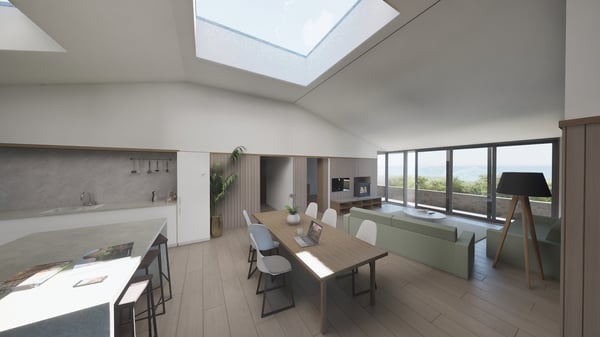
At Marraum, we use virtual reality as part of our design process, allowing you to walk through your proposed home before construction begins. This gives you the opportunity to experience room sizes and views plus the relationship between different spaces, helping you make informed design decisions before building work starts.
Timeline and disruption
Buying and moving can be done in months. Rebuilding takes years. If your circumstances require a new home quickly, perhaps because of a growing family, a health change, or a job move, the rebuild timeline may simply not fit. The disruption of living away from your plot while work proceeds is real and should not be minimised.
Planning risk
Planning permission is never guaranteed. Even a well-considered proposal can be affected by landscape, heritage, ecology, access, neighbouring properties plus local planning policy.
Before committing to a replacement dwelling, it can be useful to review the site's planning history plus constraints, then consider whether Cornwall Council's pre-application service would help establish how the principle, scale plus design of a replacement home may be viewed.
This early work cannot guarantee planning permission, but it can identify significant risks before too much time or money is committed to a particular solution.
Environmental impact
There is also an environmental consideration when deciding whether to demolish an existing home.
Building a new property provides the opportunity to achieve high levels of energy efficiency through modern insulation, heating systems plus carefully considered construction methods. However, demolishing an existing building also means losing materials and structures that may still have a useful life, while introducing the embodied carbon associated with new construction.
In some circumstances, renovating and improving the existing bungalow may offer a more balanced solution. The right approach depends on the condition of the building, the extent of alterations required plus the energy performance that can realistically be achieved.
When rebuilding wins
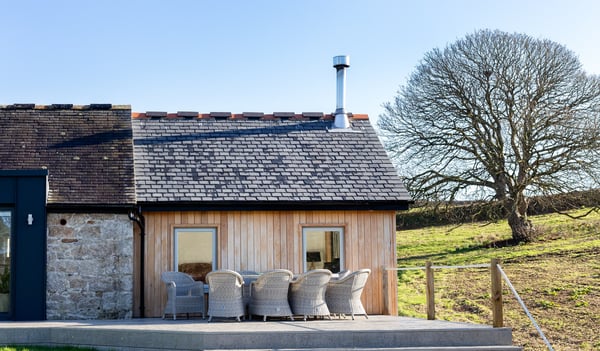
The bungalow rebuild cost vs buying elsewhere calculation tips firmly toward rebuilding when several conditions align. You own your plot outright, or have substantial equity with a clear financing route. The local property market is expensive and supply of homes that match your needs is genuinely limited. You have a vision for a self-build bungalow replacement that goes beyond what you are likely to find on the open market. You have the patience and resilience for a two-year project. And you feel a genuine attachment to your current location that would be difficult to replicate elsewhere.
In these circumstances, you end up with a home that is entirely your own: designed around you. Built to modern energy standards. With no deferred maintenance inherited from someone else's decades of ownership. Our new build architect services in Cornwall are designed to guide you through exactly this process, from the first sketch to the final handover.
When buying elsewhere makes more sense
There are situations where moving is the cleaner, wiser choice. If your plot carries genuine planning constraints that would prevent you from building the home you need, a bungalow rebuild may deliver less than you hope. If your timeline is tight, the 18-to-24-month construction process creates real hardship. If the local rental market is expensive and your carrying costs would be high, the financial advantage in any bungalow rebuild cost vs buying elsewhere comparison can erode quickly. And if you have found a property that genuinely meets your needs, the premium you pay for it may be entirely justified against the risk and complexity of a build project.
Moving also offers a cleaner emotional break, which for some people is exactly what a new chapter requires.
How to make your final decision
Before you commit to either path, these questions deserve honest answers.
- How much equity do you have in your existing home plus how would a rebuild be financed?
- Have you checked the planning history, constraints plus relevant policies affecting your site?
- Would formal pre-application advice be worthwhile before committing to a replacement dwelling?
- Have you allowed for demolition, construction, professional fees, statutory fees, temporary accommodation plus contingency?
- Have you considered the different VAT treatment that may apply to renovation plus a qualifying new build?
- Is there actually a property available in your preferred location that would meet your needs without substantial further work?
- Are you comfortable with the time, disruption plus decision making involved in designing plus building a new home?
- Most importantly, which option is more likely to give you the home plus location you want for the money available?
If you are still unsure which route makes the most sense, it may be worth exploring the potential of your existing property before committing to either option.
In some circumstances, a carefully considered renovation or extension can achieve much of what you want from a replacement home without the cost of complete demolition and reconstruction. In others, starting again may offer considerably greater design flexibility and long-term value.
The important thing is understanding these options before making a decision. You can explore our frequently asked questions or book a free consultation with Marraum to discuss your property, budget plus what you would like to achieve.
You can also view our recent architecture projects to see how other Cornish homeowners have navigated exactly this kind of decision, and to get a feel for what becomes possible when a site is approached with genuine creative ambition.

FAQs bungalow rebuild vs buying elsewhere
Ready to explore what your plot could become?
Whether you are leaning towards rebuilding or still wondering whether moving makes more sense, the best place to start is understanding what your existing plot could realistically offer.
Book a free consultation with the Marraum team and we can talk through your home, your budget plus what you would like to change. From there, we can help you understand whether rebuilding deserves serious consideration before you decide to put your home on the market.
You can also meet the Marraum team or explore our architectural services in Cornwall to see how we work.