

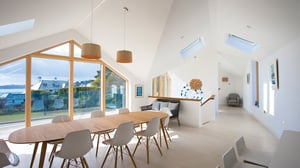
At Marraum, a RIBA Chartered Architects based in Penryn, we've guided over 600 projects through the planning process across Cornwall, and we have a 99% approval rate to show for it.
The reasons planning permission gets refused are almost always fixable. It might be a design that hasn't addressed a neighbours sightlines, drawings that didn't give the planning officer the full picture, or a heritage constraint that needed a more considered response. Whatever the reason, we know how to resolve it.
If your application has been refused, or you want to make sure yours doesn't end up that way, get in touch with our team. We’ll review where things stand and give you clear, honest advice
Contents
1. Conflict with the local development plan
The most common reason for refusal at every scale of development.
Every council in England has a Local Development Plan (LDP), sometimes called a Local Plan, which sets out policies for what kinds of development are acceptable in specific areas. This covers everything from maximum building heights and setback distances to minimum garden sizes, acceptable materials and protected land designations.
If your proposal conflicts with a specific policy in the Local Plan, officers are likely to refuse it. Common conflicts include:
- Exceeding the maximum permitted height for residential extensions in the area
- Reducing garden space below the council's minimum depth policy
- Building on land the Local Plan designates as protected open space
- Proposing a use that is not permitted in the relevant zone
How to avoid it: Download your council's Local Plan before you draw a single line. Most are freely available on council websites. Pay particular attention to the householder development policies and the policies applicable to your specific area. Better still, book a pre-application consultation with your council's planning department. Many authorities offer this service for a modest fee and a brief conversation with a planning officer can identify problems before you spend money on architects and surveys.
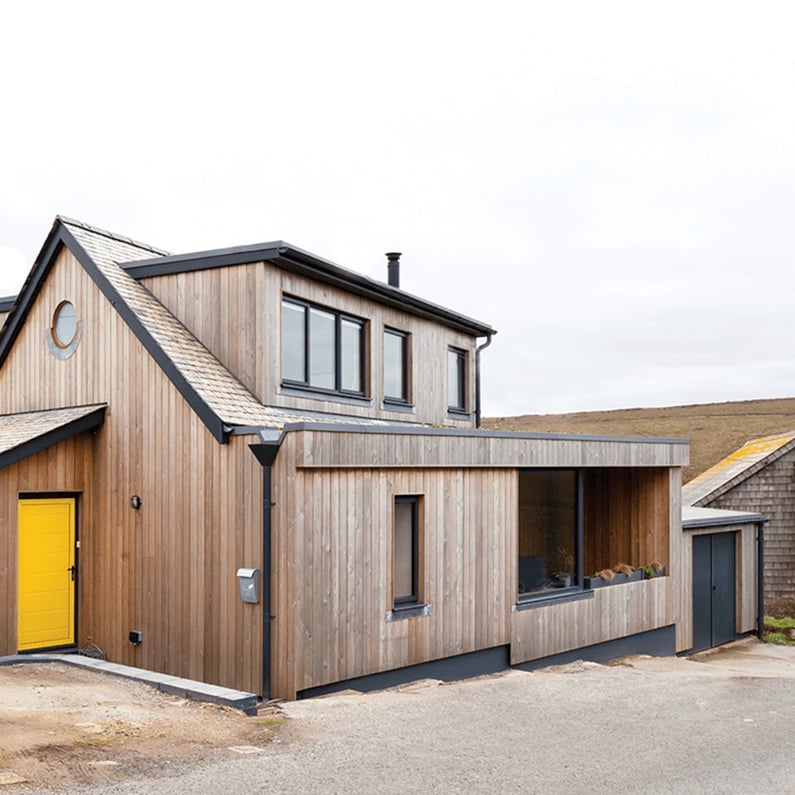
2. Harm to the character and appearance of the area
One of the most subjective and frequently disputed reasons for refusal.
Councils have a duty to preserve and enhance the visual character of the local environment. If your proposed development appears out of keeping with the surrounding area – whether through scale, massing, design style, or materials, it can be refused on grounds of harm to character.
This does not mean every building must look identical to its neighbours. Modern extensions on traditional houses are routinely approved. But proposals that are dramatically out of scale, use clashing materials, or introduce forms completely at odds with local patterns are often refused on this basis..
In conservation areas, the bar is considerably higher. Even small changes, the wrong type of window, inappropriate cladding, a flat roof where pitched roofs dominate, can trigger refusal.
How to avoid it: Study your street carefully before designing. What are the prevailing materials? What roof forms dominate? How does the pattern of front setbacks, rear projections and ridge heights read from the street? Your design does not need to be a pastiche, but it needs to demonstrate awareness of and respect for the local context. A brief design and access statement that explains your design thinking can significantly help officers understand your rationale. In conservation areas, consult your council's conservation officer early.
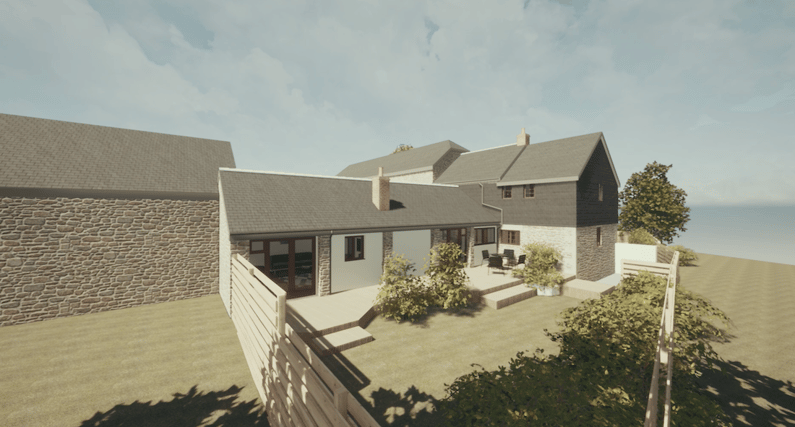
3. Overlooking and loss of privacy
One of the most frequently cited reasons for refusal on residential extensions.
Privacy is taken seriously in UK planning. If your proposed development would allow direct views into neighbouring windows, gardens, or living spaces that residents could reasonably expect to be private, it is likely to be refused.
The most common scenarios are:
- New windows or rooflights on upper floors facing a neighbouring property at close range
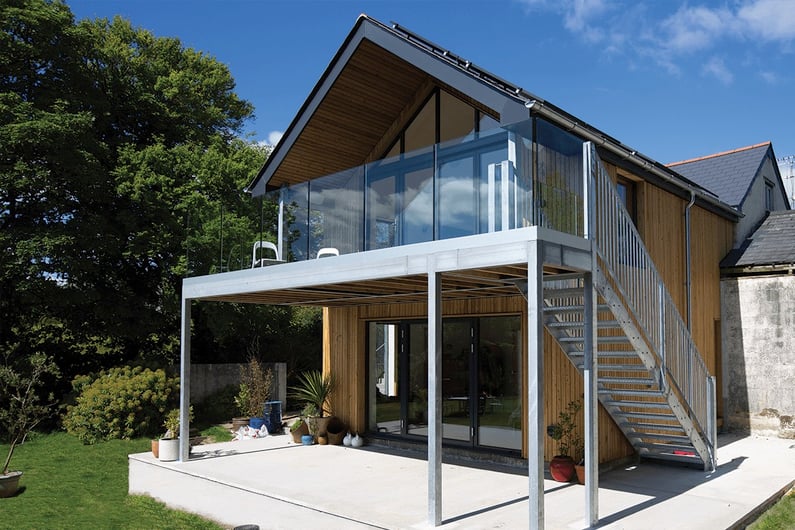
- Elevated terraces, balconies, or roof terraces with sightlines into adjacent gardens
- Side extensions with windows overlooking the neighbours' side garden
- First-floor rear extensions with windows directly overlooking a neighbour's main living space
How to avoid it: For any window or opening that is within 21 metres of a neighbouring habitable room window, a widely used planning benchmark, consider whether it creates a direct line of sight. Solutions include: obscure glazing, high-level windows (opening parts above 1.7m from floor level), rooflights set at a low pitch, or repositioning windows to face away from neighbours. A sun and daylight analysis can demonstrate you have considered the impact.
4. Loss of light or overshadowing
Closely related to privacy – but distinct. Loss of light is assessed on measurable criteria.
If your extension or building would significantly reduce the amount of natural light reaching a neighbouring property's windows or garden, it can be refused. Councils and appeal inspectors often apply recognised tools to assess this, including:
- The 25-degree rule: If a line drawn at 25 degrees from the centre of a neighbouring window to the top of your proposed extension is cleared, the loss of light may be acceptable. If your development rises above this line, refusal is more likely.
- The BRE Guidelines on daylight and sunlight (published by the Building Research Establishment), which planning officers and inspectors increasingly treat as a benchmark.
Overshadowing of neighbouring gardens is also a consideration, particularly where the loss of sunlight would materially affect the enjoyment of outdoor space.
How to avoid it: Reducing the height, depth, or bulk of your proposed extension is the most direct response. Stepping back upper parts of a building away from boundaries, using sloped or monopitch roofs, and keeping eaves low near boundaries all help. For larger or more complex schemes, commission a daylight and sunlight assessment at design stage.
Back to top
5. Overbearing impact or loss of outlook
Different from loss of light – this is about the physical dominance of your building on a neighbour.
Even where measurable light loss is limited, a building can be refused because its sheer size creates an oppressive or dominating presence when viewed from a neighbouring property. Planners sometimes describe this as an "overbearing" impact, and it often arises when:
- A tall extension fills a neighbour's entire outlook from a main window
- A high blank wall is built close to a boundary, creating a tunnel effect
- A large structure overshadows a small garden even without blocking specific windows
How to avoid it: The 45-degree rule is a useful design guide here. If a line drawn at 45 degrees from the nearest window of the neighbouring property is not broken by your proposed extension, it is less likely to be considered overbearing. Pitching roofs away from boundaries, reducing ridge heights, and using materials that read as lighter or less dominant can all help reduce the perceived bulk.
Back to top
6. Inadequate or incorrect application documents
One of the easiest reasons for refusal to avoid.
A significant number of applications are refused because the submitted documents are incomplete, inaccurate, or unclear. Planning officers assess what is submitted, not what was intended. If your plans contain errors, omissions, or inconsistencies, the council may refuse on the basis that it cannot properly assess the proposal.
Common documentation problems include:
- Inaccurate site or location plans that do not match the actual site
- Missing elevation drawings (particularly rear or side elevations that would be most affected)
- Scale errors or missing scale bars
- Lack of a design and access statement where one is required
- Missing supporting documents such as a flood risk assessment, bat survey, or heritage statement
- Floor plans that do not clearly show existing and proposed layouts
How to avoid it: Use an experienced architect or architectural designer who knows your local planning authority's validation requirements. All English councils publish a local validation checklist setting out exactly what must be submitted. Check this list carefully before submitting. Most refusals on documentation grounds can be resolved by resubmitting with corrected drawings – but a formal refusal on your record is avoidable.
7. Parking, highways and traffic concerns
Particularly relevant for extensions that affect driveways, or any change of use application.
If your development would reduce the amount of off-street parking available, increase traffic movements in a problematic way, or compromise highway safety near a junction or access point, it may be refused on highways grounds.
For householder extensions, this most commonly arises when:
- An extension would eliminate an existing driveway or garage, removing off-street parking
- Works would require vehicles to reverse onto a busy road
- A side extension reduces visibility near a junction
For commercial, mixed-use, or change-of-use applications, traffic generation is assessed more formally, and a Transport Assessment or Transport Statement may be required.
How to avoid it: If your proposal affects parking provision, demonstrate in your application how parking needs will still be met. Check your council's parking standards (usually found in the Local Plan transport policies) for the minimum number of spaces required for your property's size. For access concerns, you may need to commission a swept path analysis or obtain pre-application advice from the council's highways team.
8. Impact on heritage assets and Conservation Areas
The planning system gives very strong weight to protecting the historic environment.
If your property is a listed building, is in a conservation area, or is near a scheduled monument or registered historic park and garden, the threshold for approval is significantly higher. Councils and Historic England take a precautionary approach to heritage impact: where there is doubt, the presumption is against development that might cause harm.
Key rules:
- Any works to a listed building that would affect its character require Listed Building Consent, regardless of whether planning permission is also needed
- In a conservation area, applications that would harm the special architectural or historic interest of the area are refused
- Development that would harm the setting of a listed building – even if not on the listed building itself – can be refused
- Article 4 Directions remove permitted development rights in many conservation areas, meaning even minor works require full planning permission
How to avoid it: Consult your council's conservation officer before submitting. They are paid to advise, not just to refuse, and early engagement almost always improves outcomes. Use materials that are appropriate to the period and character of the building. Commission a Heritage Impact Assessment for more complex schemes. The key test is whether harm can be justified by the public benefit of the proposal.
9. Environmental and ecological constraints
An increasingly common and increasingly technical ground for refusal.
Planning law requires councils to consider the environmental impact of development, including effects on protected species, habitats, trees and flooding. Refusals in this category arise from:
- Protected species: Bats, great crested newts, badgers, barn owls and certain other species enjoy strong legal protection. If your site or building provides habitat for protected species and you have not surveyed for them or proposed adequate mitigation, your application may be refused or deemed invalid.
- Trees with Tree Preservation Orders (TPOs): Proposals that would damage or remove a TPO tree require separate consent, and development near protected trees must demonstrate it will not harm their root zone.
- Flood risk: If your site is in Flood Zone 2 or 3 (as shown on the Environment Agency's flood maps), you will need a Flood Risk Assessment. Development that increases flood risk to other properties is refused.
- Biodiversity Net Gain (BNG): Since November 2023, most planning applications in England must demonstrate at least a 10% net gain in biodiversity. Applications that do not address this are often refused or deemed invalid.
How to avoid it: Before designing anything, check the Environment Agency flood maps, your council's tree records, and any ecological desk studies or Phase 1 habitat surveys for your area. If bats or other protected species are even potentially present, commission a survey at the right time of year. Factor in BNG requirements from the outset.
10. Green belt and inappropriate development in protected locations
The hardest refusal reason to overcome.
Around 12% of England is designated Green Belt. Development in the green belt is subject to a strong policy presumption against approval under both the National Planning Policy Framework (NPPF) and most Local Plans. Applications for new buildings or substantial extensions in the green belt will almost always be refused unless they fall within one of a very narrow set of exceptions.
The five exceptions to green belt restrictions under the NPPF are:
- Buildings for agriculture or forestry
- Provision of appropriate facilities for outdoor sport and recreation
- Cemeteries and churchyard extensions
- Extensions or alterations to an existing building that do not result in disproportionate additions over and above the original
- Limited infilling in villages
The word "disproportionate" in exception 4 is critical for householders. If your extension would significantly increase the footprint or volume of the original house, it is likely to be considered disproportionate, even if it would be fine outside the green belt.
How to avoid it: Check whether your property is in the green belt before commissioning designs. Your council Local Plan and the Planning Portal interactive map will confirm this. If it is, seek professional advice before investing in detailed plans. In some cases, a smaller-scale proposal designed within the "limited addition" thresholds can still be approved, but it requires careful justification.
Frequently asked questions
Ready to get your planning permission approved?
Planning permission doesn't have to be stressful, it needs to be handled correctly
Whether you're just starting to think about an extension, or you've already got a project in mind and want to know where you stand, Marraum is here to help. As RIBA Chartered Architects based in Cornwall, we have achieved a 99% approval rate across more than 600 projects, and we are ready to help you achieve the same. Get in touch with us today.